
If you live along the Colorado Front Range, you’ve probably noticed how dry it’s been lately. Warm temperatures, minimal snowpack, and below-average precipitation have created drought conditions across much of the state. In fact, much of Colorado entered March 2026 with record-low snowfall totals and below-normal precipitation, increasing the risk of drought stress for landscapes and trees. As of March 10th, all of Boulder County is in “Severe Drought” according to the U.S Drought Monitor.
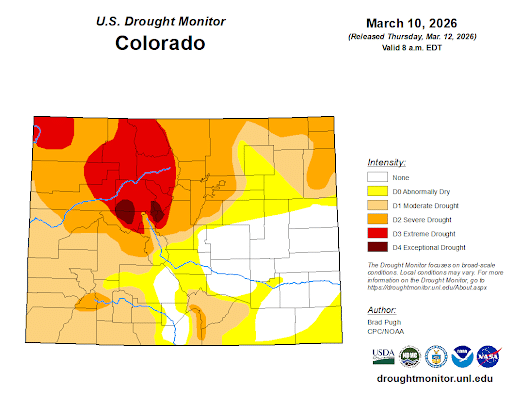
During winter months, the damage caused by dry conditions to tree roots often goes unnoticed, since it is happening under the soil surface. Without enough moisture in the soil, fine feeder roots dry up and die. When (hopefully) spring and summer rains come, there will be water in the soil, but a tree that suffered drought damage to its root system over the winter will not have enough functioning “straws” to suck it up (think of feeder roots as a drinking straw). The good news is that homeowners can take steps to help their trees stay healthy until moisture returns.
Below is a look at how drought affects trees and what you can do right now to help protect them.
How to Know if it’s Too Dry for Your Trees
A resource that I use regularly to assess the current precipitation situation is the Colorado Climate Center 30-Day Precipitation Map .
This map shows hundreds of weather stations across Colorado. By scrolling over a station, the map will tell you the amount of precipitation that station has received in the past 30 days. Generally speaking, mature trees start to suffer drought stress and damage when there is less than 1.0 inch of precipitation in a 30-day period.
The fall of 2025 and winter of 2026 has been unusually dry and warm. In January and February, there was a 60 day stretch where Louisville saw less than 0.2 inches of precipitation in total. Light snow that falls often melts and evaporates before it can soak into the soil, leaving soils short on the deep moisture trees depend on.
It’s been windy too. The Front Range had at least 16 Red Flag Warning days in the months of January and February alone. These warnings are issued during periods of high wind and low humidity, exactly the kind of conditions that dry out tree roots and cause drought damage.
How Drought Stress Impacts Trees
Damage and stress symptoms from drought may not show up until the following spring/summer and could include reduced leaf size, chlorosis (yellowing of leaves), branch dieback, or trees dying. Winter drought conditions may also stress trees which could make them more susceptible to attack from insects like the Ips beetle.
- Reduced Growth
Trees need water from the soil (and the nutrients in it) to complete their life process. Less water means less ability to grow and thrive. Drought damages feeder roots (drinking straws), and results in a tree not being able to take up enough water. - Increased Susceptibility to Insects and Disease
Drought-stressed trees cannot produce as much sap or defensive compounds, making them easier targets for pests. In Colorado, bark beetles and other insects often attack weakened trees, especially during warm, dry years. - Leaf Drop and Needle Browning
One of the symptoms of drought stress is premature leaf drop in deciduous trees or browning needles in conifers. Trees reduce leaf area to conserve water. These symptoms are often the first visible signs that there is something wrong with the tree, but occur months after the root damage has happened. - Higher Risk of Branch Dieback or Tree Loss
If drought persists long enough, trees can begin dying back from the top down. This can lead to structural hazards and eventual tree failure.
Trees Most at Risk in the Front Range
While any tree can experience drought stress, some species tend to struggle more in extended dry periods:
- Most conifers, including pines, spruce, and fir
- All trees planted within the last 4 years
- Trees that are native to wet sites, including willow, silver maple, birch, alder, ect.
- Trees growing in compacted or shallow soils (most trees growing on the Front Range)
What Homeowners Can Do to Help Their Trees
The good news is that a few simple steps can dramatically improve a tree’s chances of surviving drought.
- Water Trees During Warm Winter and Dry Periods
If temperatures are above about 40°F and the ground isn’t frozen, winter watering can help replace missing precipitation.A general guideline used by arborists is about 10–15 gallons of water per inch of trunk diameter per watering for newly planted trees and about 5-10 gallons of water per inch of trunk diameter for established trees.
Water slowly so it soaks deep into the soil rather than running off.
- Water the Entire Root Zone
Tree roots extend well beyond the trunk — often to the edge of the canopy (called the drip line). Water across this entire area for the best results. See my blog post on winter watering for more specific tree watering instructions. - Use Mulch
Applying 2–3 inches of wood mulch around trees helps retain soil moisture and moderate soil temperature. Just be sure to keep mulch a couple inches away from the trunk to prevent rot.Need some wood chips? We got plenty, just ask. See our Firewood and Wood Chips page for more information.
- Avoid Stressful Pruning
Heavy pruning during drought can add stress to trees. Focus on removing only dead or hazardous branches until moisture conditions improve. - Monitor for Pests and Disease
Drought-stressed trees are more vulnerable to pests such as bark beetles. Early detection and treatment can prevent larger problems.
When to Call a Professional Arborist
Probably yesterday, but today will have to do. Patriot Tree Company’s arborists have many years of experience dealing with drought issues in the Front Range urban forest.

A Certified Arborist can help by:
- Evaluating drought damage
- Providing deep root watering treatments or other Plant Health Care services
- Identifying pest or disease problems
- Safely removing hazardous trees or tree parts
Addressing these issues early can save valuable trees and prevent costly damage later.
Protecting Your Trees During Colorado’s Dry Cycles
Drought has been a normal part of Colorado’s climate, but climate records show these dry periods are becoming longer and more pronounced. By watering strategically, protecting soil moisture, and monitoring tree health, homeowners can help their trees survive until wetter conditions return.
If you’re concerned about drought stress in your trees, the team at Patriot Tree Company is here to help. Our experienced arborists can evaluate your trees and recommend the best plan to keep them healthy through Colorado’s challenging climate.